Should You Clean Your Own Roof in Melbourne? DIY vs Pros
By Roof Solutions Melbourne ·
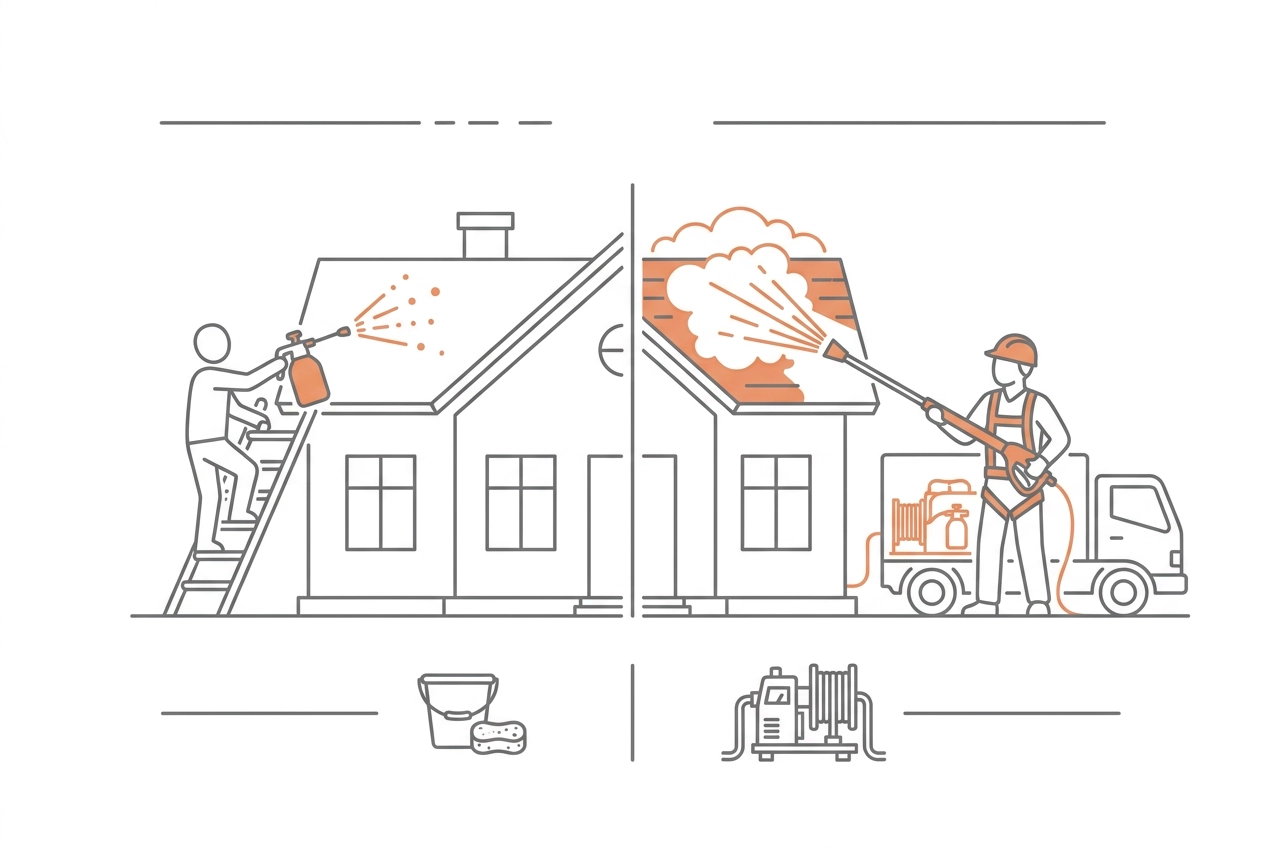
A broom, a hose, and a free Saturday can handle some roof cleaning jobs. But they cannot make a steep, high, or moss-covered Melbourne roof safe to walk on. Before you climb up, it helps to know exactly where simple DIY ends and where professional help begins.
This guide compares DIY and professional roof cleaning honestly. You'll learn what DIY can actually fix, when moss, lichen, tile damage, or safety risks mean you should stop, and why Melbourne's weather makes roofs dirty faster than many homeowners expect. We also explain what a professional clean involves on common tile and Colorbond roofs, how the two options compare side by side, what each really costs, and a five-minute way to decide. There are answers to common questions too, including pressure washing, moss damage, cleaning frequency, safety, solar panels, and quotes. The goal is not to scare you away from basic maintenance. It is to help you avoid spending more on repairs and risk than you save. By the end, you'll have a clear, practical answer for your own roof.
What DIY Roof Cleaning Can Actually Fix
Ground-level work is realistic DIY scope. Ladders suit only simple, short tasks. A leaf blower, soft broom on an extension pole or long-handled rake clears leaves, twigs and seed pods from valleys, lower sections and driveways without leaving the ground.
Gutter cleaning from a stable step ladder is manageable on many single-storey Melbourne homes if the ladder sits on firm level ground, is angled correctly, secured at the top and footed by a second person. Wear gloves, expect sharp edges, never over-reach sideways.
Gentle hose rinse handles light dust, cobwebs and bird droppings on low sections of a single-storey, low-pitch roof where spray reaches. If you must climb to reach it, stop.
Clearing debris around skylights, vents and flashing from ground level or a platform reduces the chance of material damming and holding moisture.
Rinsing solar panels from the ground, or with a soft pole-fed brush while standing safely, is often fine where the manufacturer allows it. Avoid detergents unless confirmed suitable, and never walk on panels.
DIY covers ground-level litter and light surface grime. Anything needing roof access, steep-pitch work or treatment of established growth belongs elsewhere.
Where DIY Roof Cleaning Stops Working
Rooted moss marks the first real limit. It roots into tile gaps and the porous surface of terracotta and concrete, so brushing removes top growth but leaves roots and spores to return thicker each season.
Lichen is harder. It bonds tightly to tile faces, ridges and Colorbond sheeting, and scrubbing it off takes surface material with it. It needs treatment at the right concentration and dwell time, then repeat visits.
Pressure washing does the costliest damage. A domestic unit can damage roof tiles by stripping glaze, pitting terracotta, forcing water under laps and lifting Colorbond coatings.
Fragile materials demand judgement, not enthusiasm. Housing Industry Association guidance says treat roof materials as fragile unless a competent person confirms otherwise, including wood slabs, slates, tiles and corroded metal sheeting.
Hidden defects get missed. Vents and skylights are hard to see, and homeowners cannot tell a cleaning problem from failing ridge capping, a cracked tile, a blocked valley or a leak.
Once a job needs chemical treatment, working at height or a call on tile repairs or repointing, the DIY saving is gone. Know that before buying a pressure washer.
Roof Safety: The Strongest Argument Against DIY
Regrowth and damage are DIY's practical limits; safety is the hard one. Falls from height are the leading cause of death and injury on roofs, and Safe Work Australia notes even low falls can cause permanent injury. Cleaning gutters or replacing a tile carries the same hazards as major work.
Australian guidance treats a fall risk above two metres as high-risk construction work, which even a single-storey Melbourne roof exceeds. Falls from ladder height and roof edges cause the serious injuries.
Treat a roof as fragile unless a competent person confirms otherwise. HIA lists tiles, slates and wood slabs as likely fragile, with corroded metal sheeting a concern on older roofs. Vents and skylights hide in low light or under dirt, and a foot or ladder leg on one leads to a fall.
The control hierarchy is blunt: avoid height work first, then reduce roof time, then fall prevention and arrest systems. A ground-based clean avoids roof access entirely. WorkSafe Victoria ranks lifting and handling as the first roofer hazard, and moss removal means wet debris bags and hoses across an uneven surface.
Still unsure? Our Frequently Asked Questions answer the common ones.
Why Melbourne Roofs Get Dirty Faster Than You Expect
Safety settles who should do the work; local conditions settle how often it needs doing. Melbourne's damp winters, humid springs and heavy dew keep roofs wet for long stretches. Moss and lichen establish fastest on shaded, south-facing slopes that rarely dry out. Tree cover compounds it. Oaks, gums, elms and plane trees drop leaves, bark, seed pods and sap into valleys, behind ridge capping and into box gutters, where debris holds moisture against the surface. Roof type matters too. Many middle-ring and inner Melbourne homes carry older terracotta or concrete tiles with porous surfaces, cracked bedding and loosening ridge capping, all giving moss a foothold. Colorbond resists moss better but still supports lichen and shows staining. Hot spells, heavy rain, hail and bayside salt add further wear, so a roof can look worse after one wet season. Cleaning frequency therefore depends on shade, tree cover and material rather than the calendar. See our frequently asked questions for more detail.
What Professional Roof Cleaning Actually Involves
Every job starts with assessment, not a pressure washer: roof type, sheet or tile condition, moss and lichen coverage, pitch, access and safety planning. Failing bedding, cracked tiles and blocked valleys are often caught here.
Established moss on tiles is removed by hand, then soft washed rather than blasted, and treated to inhibit regrowth. Debris is bagged and removed, gutters and valleys cleared. Failing ridge capping may need repointing or rebedding, and broken tiles are best replaced while access is set up.
Colorbond and metal roofs get low pressure and a coating-appropriate cleaner, never abrasion. Corroded edges, tired fixings and scratches are noted.
Safety is core: fall prevention and restraint equipment, correct ladder and staging practice, and a roof-specific plan.
Moss, leaves and silt are collected, not hosed into stormwater.
A clean doubles as an inspection, so anything spotted can be quoted without a second visit. Roof Solutions Melbourne covers cleaning, moss and lichen removal, gutter clearing, inspections, minor and tile repairs, repointing, rebedding, leak repairs, roof painting, pressure cleaning and solar panel cleaning. Our Frequently Asked Questions explain more; processes vary, so ask providers what theirs involves.
DIY vs Professional Roof Cleaning: Side by Side
With the professional process clear, here is how they compare.
Time and effort. DIY is a weekend of blower work, ladder time and gutter clearing, repeated as surface moss returns. Professional cleaning is usually one visit, with removal and disposal handled on the day.
Risk to you. DIY puts you on a ladder or roof without fall protection, where serious injuries happen. Professionals carry that risk with trained crews, equipment and documented safety controls.
Risk to the roof. DIY pressure washing commonly damages tiles, terracotta and Colorbond coatings. Professionals match pressure and products to the surface, protecting the finish.
Result quality. A hose and broom shifts loose debris and green growth only. Professional treatment addresses rooted moss and bonded lichen, clears gutters and valleys, and inhibits regrowth, so results last longer.
What gets found. DIY misses cracked tiles, failed flashings, loose ridge capping, blocked valleys and early leaks. Trained eyes catch these before they become ceiling stains. The same applies to DIY vs professional solar panel cleaning.
Cost of getting it wrong. A few hundred dollars saved can vanish with one cracked tile or stripped Colorbond panel.
What Each Option Really Costs
DIY is not free. Equipment, products, protective gear and your time add up, and because untreated roots regrow, you pay again next season. Disposing of wet moss and debris adds another chore.
Professional quotes vary with roof size, storeys, pitch and access, tile versus Colorbond, moss and lichen coverage, gutter and valley clearing, and any repointing, rebedding or tile replacement. Ask for an itemised written quote, not a figure over the phone.
The hidden cost sits in damage and risk: a stripped coating or cracked tile run can exceed the price of a professional clean. Check your policy too: whether household insurance responds to an injury on your own roof, or to damage you cause while cleaning it, depends on your wording, so confirm with your insurer.
Bundling helps. Combining roof cleaning with gutter cleaning, moss and lichen treatment, solar panel cleaning or an inspection in one visit usually costs less than separate bookings and cuts repeat roof access.
Quotes from a specialist roof cleaning service in Melbourne are generally free, so comparing DIY against a professional clean is straightforward. Our roof cleaning guides explain each job.
How to Decide in Five Minutes
Costs aside, the decision takes five checks.
Do it yourself only if single storey, low pitch, loose leaves and twigs, no visible moss or lichen, and everything is reachable from ground level with a blower, pole or hose.
Stop and book professional help if moss has rooted into mats, lichen is bonded to tiles or Colorbond, the pitch is steep, the roof is multi-storey, access is awkward, tiles are old, porous or cracked, or the material may be fragile or corroded.
Any need to stand on the roof, lean a ladder on a gutter or reach sideways across a ladder is where DIY ends.
Uncertain? Book a roof inspection; no clean commitment is required. It confirms if cleaning, moss removal, gutter clearing, repairs, repointing or nothing is needed, and gives you a written picture.
Match method to material. An ageing tiled roof with failing bedding and moss differs from a ten year old Colorbond roof with leaf litter; matching them prevents damage.
Common Questions About Roof Cleaning in Melbourne
Can I pressure wash my roof?
No. Pressure can strip tiles, erode terracotta and lift Colorbond coatings. Use low pressure or soft washing.
Does moss damage roof tiles?
Roots hold moisture, widen joints and loosen bedding mortar. Treat after removal to slow regrowth.
How often should a roof be cleaned?
No fixed schedule. Shaded, tree-covered roofs need more frequent attention. Check each autumn after leaf drop.
Is DIY roof cleaning safe?
Ground-level litter is fine. Roof work is not, as falls cause serious injury. Book a professional if you need fall protection.
Should solar panels be included?
Combine panel cleaning with roof and gutter work for better value. Ask for an itemised written quote after assessment. Ready for a cleaner roof?
Can I pressure wash my own roof?
Generally no, and the concern is damage rather than dirt. A domestic pressure washer can strip the surface from concrete tiles, erode terracotta, force water under laps into the roof space, and lift Colorbond paint coatings. That damage is expensive and often permanent.
If a roof genuinely needs higher pressure work, it needs an operator who can judge the correct pressure, nozzle and distance for that specific material. Cleaning a roof properly is usually a low-pressure or soft wash job, not a blasting job. Match the method to the material before any water touches it.
Does moss damage roof tiles?
Even without a pressure washer in the picture, moss damages roof tiles over time. It roots into the porous surface of terracotta and concrete tiles and into the gaps between them, holding moisture against the roof, widening joints, and lifting tile edges and bedding mortar.
Left alone, moss contributes to cracked tiles, loose ridge capping and blocked valleys. That is why moss removal is usually paired with a treatment to slow regrowth, rather than a brush and hose alone.
How often should a Melbourne roof be cleaned?
Because moss left in place keeps causing problems, frequency matters. There is no single answer. A shaded roof under mature trees in wetter Melbourne suburbs usually needs attention more often than a sun-exposed Colorbond roof with little tree cover. A practical approach is an annual check in autumn, once the worst leaf drop has passed. Then arrange roof cleaning only when moss, lichen, gutter debris or staining actually justifies it. This keeps the roof healthy without unnecessary work or repeat costs.
Is roof cleaning safe to do yourself?
Whatever the frequency, safety decides who does the work. Ground-level roof cleaning, and gutter clearing from a properly set up ladder on firm, level ground, can be reasonable for a careful homeowner who never over-reaches.
Anything that involves standing on the roof is a different proposition. Falls from height are a major cause of death and injury in roof work, and minor tasks such as gutter clearing carry the same hazard.
If you need fall protection equipment, staging or a harness to do the job safely, treat that as the signal to book a professional crew. Don't improvise.
Should solar panels be included, and how do quotes work?
If your roof has solar panels, yes, include them. Dust, bird droppings and lichen staining reduce output, and combining panel cleaning with roof and gutter work in one visit is cheaper and safer than booking separate trades. Quotes should be based on an assessment of your roof, not a flat rate. Ask for an itemised written quote that states what is included, whether moss or lichen treatment and gutter clearing are part of it, and what extra repairs may be recommended.
The Bottom Line
One question decides it: can you do this from the ground?
DIY roof cleaning in Melbourne suits one case: a single-storey, low-pitch roof, loose litter, no moss or lichen, all reachable from the ground.
Outside that, the maths changes. Rooted moss and bonded lichen need treatment, not brushing. Pressure washing damages tiles and Colorbond coatings. Ladders and roof surfaces carry real fall risk.
Clear only what you can reach from the ground.
Check gutters in autumn, before heavy rain.
Never pressure wash a roof yourself.
For moss mats, lichen, cracked tiles, loose ridge capping or staining, book an inspection or quote rather than climbing.
A roof inspection is low cost and shows what yours needs this year: a clean, moss and lichen removal, gutter clearing, repairs, or nothing at all.
Conclusion
Cleaning your own roof in Melbourne only makes sense in a narrow set of conditions: a single-storey, low-pitch roof with loose litter you can safely reach from the ground. Once moss, lichen, staining, damaged tiles, or solar panels are involved, DIY stops being practical. Pressure washing can harm tiles and Colorbond, and ladders create a serious fall risk. Professionals bring safe access, proper treatments, gutter clearing, and an honest assessment of what your roof needs. Rather than guessing or climbing, book a roof inspection or itemised quote. You will get a clear plan for cleaning, repairs, or no action at all, protect your home, and stay safely on the ground. Your roof will thank you.