Why Moss Stays Between Roof Tiles After a Pressure Wash
Moss and lichen can hide in the joints between roof tiles, even after a thorough pressure wash, because the water can't hit the interlocks and laps square-on. That's why we put in extra time on every roof we wash: a second check of the joints between the tiles, cleaning out anything still sitting there.
The photo below was taken on that second check, on a terracotta roof in Coburg. It shows exactly the kind of growth we go back for, before we clean it out. We photograph these spots and show them to customers, so they can see the in-between areas are done properly too.
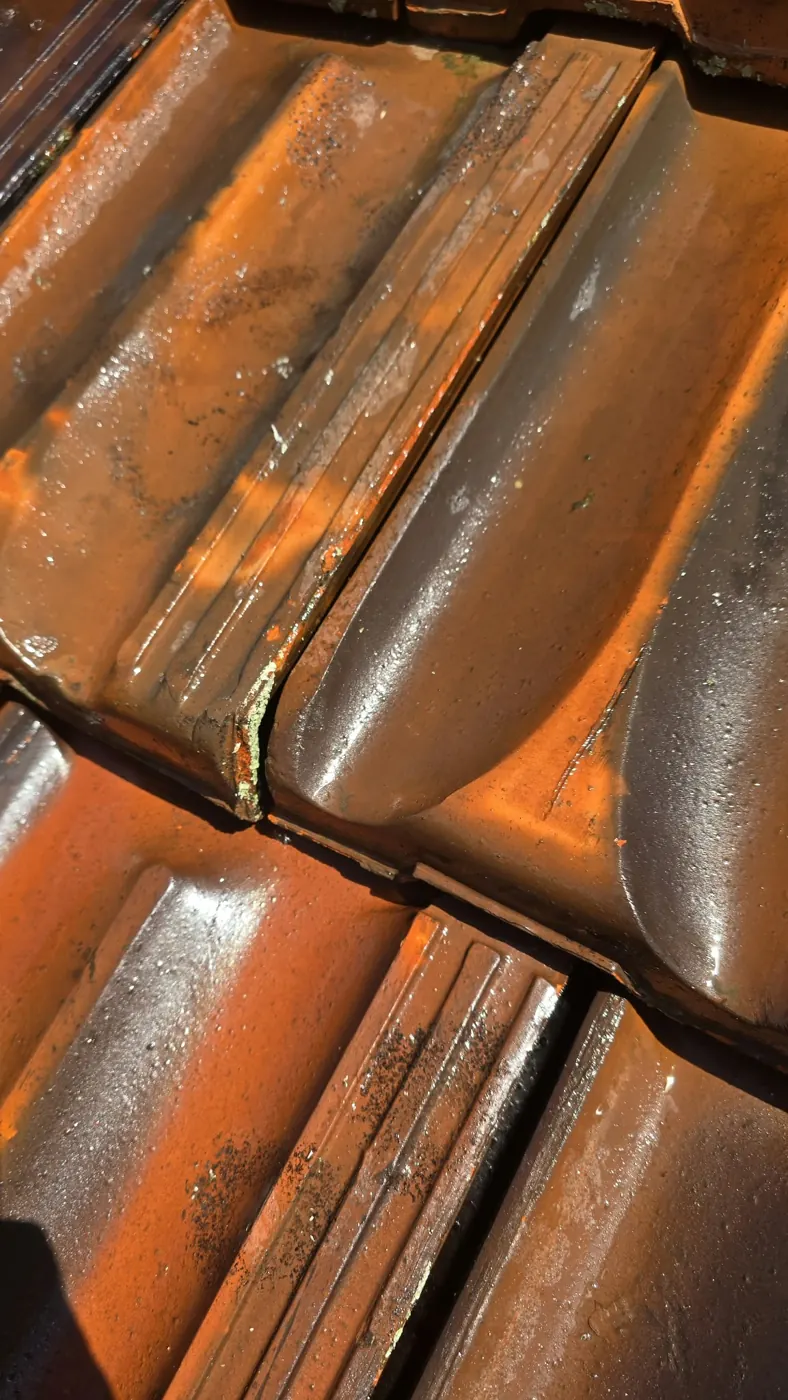
Where moss hides between roof tiles
Water from a pressure lance cleans whatever it hits directly. Growth in the places it can't reach square-on is shielded:
- The interlocks, where the edge of one tile locks into the next
- The laps, where each row of tiles overlaps the row below
- Under the front edge of each tile
- Along ridge and hip lines, especially where the pointing has cracked
- Shaded slopes that stay damp longest
Lichen after pressure washing: photos from a Coburg roof
This Coburg terracotta roof, which also has solar panels, had heavy lichen across the tiles and ridges before we started.
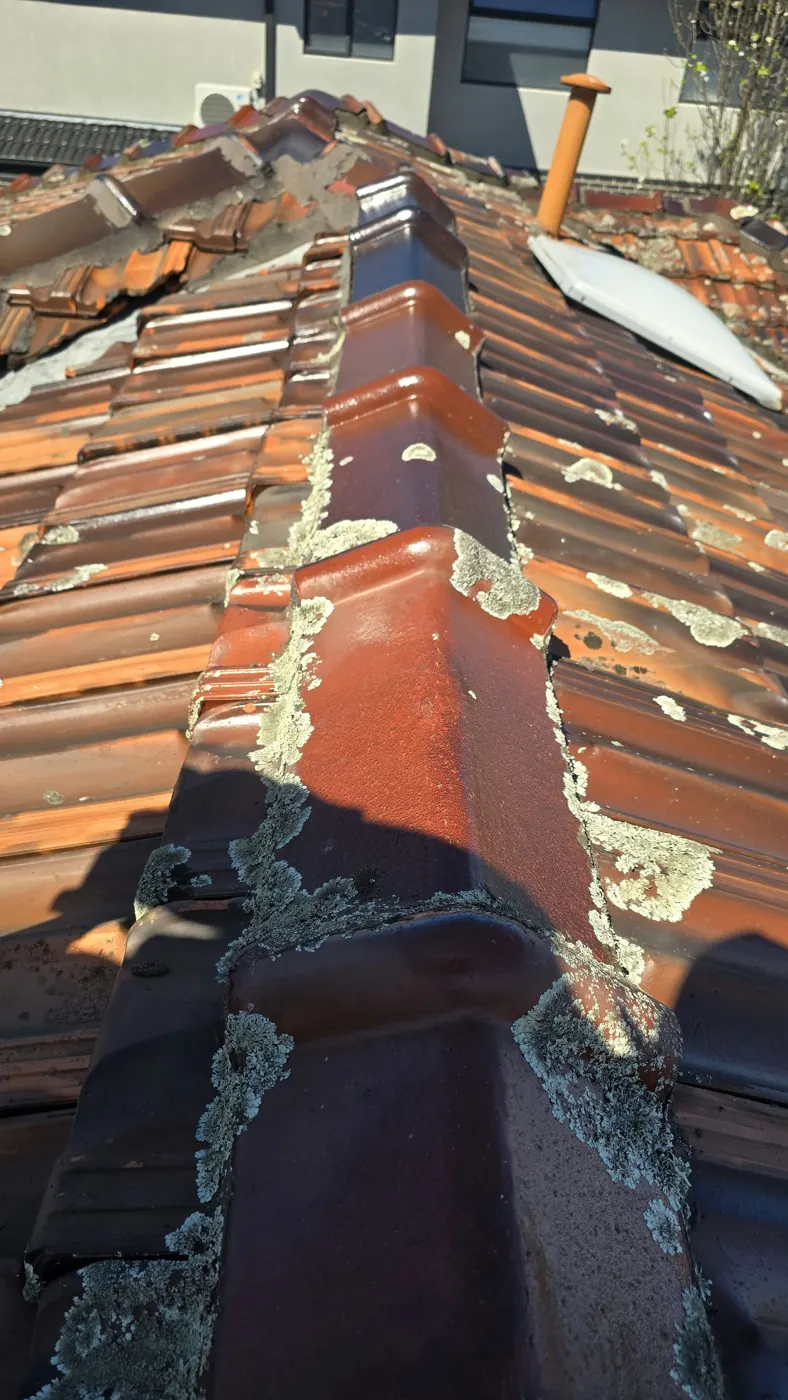
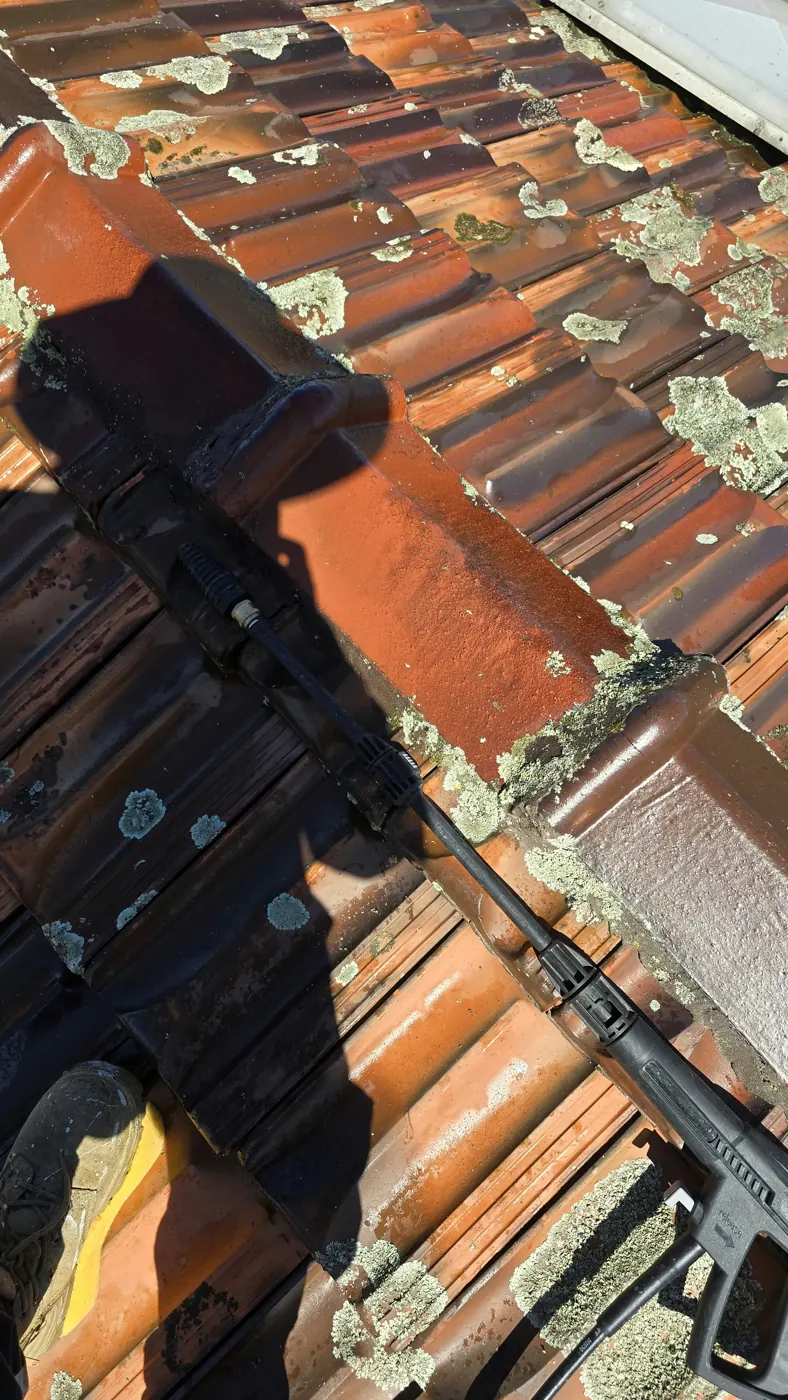
Once the tile faces were clean, we went back over the roof for our second check of the joints, where growth can still be sheltered in the interlocks.
Is moss left between tiles a problem?
Moss and lichen left in the joints hold moisture where tiles overlap. They also give regrowth a head start, so a roof can look green again sooner than expected.
Growth in the interlocks and along the ridges can trap debris and slow water running off the roof.
A clean roof is also the best time to check the ridges. On the same Coburg roof, the wash revealed cracked ridge pointing, and we fixed the cracked sections with flexible pointing in the same visit. The photos are in our Coburg roof repointing job.
What to check after any roof clean
Whoever cleans your roof, ask for close-up photos of these areas, not just a wide shot from the gutter:
- The joints and interlocks between tiles, up close
- The front edges of the tiles, especially on the street-facing side
- Ridge and hip lines, and the condition of the pointing
- Shaded slopes and areas under overhanging trees
- Gutters, where washed-off growth collects
Soft wash or pressure wash for moss in tile joints?
Two things make the difference with growth in tile joints. First, time: we do a second pass over the joints and interlocks after the main wash, rather than calling the roof done once the tile faces look clean.
Second, a soft-wash treatment. Soft washing uses low pressure with a cleaning solution that kills moss, lichen and algae, including the growth tucked into joints that water pressure can't reach, which slows regrowth. We use soft washing, pressure cleaning or a combination depending on the roof's material and condition, and Colorbond roofs are only ever soft-washed.
For the full comparison, read soft wash vs pressure washing a roof. For heavier growth across the whole roof, see our guide to roof moss removal in Melbourne. Prices are in our roof cleaning cost guide.
Frequently asked questions
Related services and guides
Want your roof cleaned properly, joints and all?
Tell us about your property and we'll send a clear written quote. Every job is inspected before it's quoted.