Roof Moss Removal Melbourne: What Actually Works
Roof moss removal starts with checking the roof material, finish, condition and manufacturer’s care instructions. Treatment, rinsing or other cleaning may suit different roofs; no single method is appropriate for every surface. Enes assesses the roof before confirming the method, areas and expected result in a written quote.
Why Melbourne Roofs Get Mossy in the First Place
Moss needs moisture and shade to establish, and plenty of Melbourne roofs provide both. Ridge lines, valleys and any section that sits under established trees stay damp longer after rain, and that's exactly where moss tends to show up first. Homes on the south side of a tree line, or with a roof plane that never gets much direct sun, are usually the ones that need attention sooner than an exposed, well-ventilated roof across the street.
Two Mistakes to Avoid Before Choosing a Method
The risk comes from using a method or product without checking whether it suits the roof. A photograph of growth is not enough to confirm the condition of the tiles or the work they need.
Assuming scraping or pressure suits every roof
Incorrect pressure or scraping can damage some tile finishes, disturb pointing or drive water under tiles. That does not mean every roof needs the same alternative: the tile product, existing finish and manufacturer’s instructions should guide the assessment.
Choosing a product without checking surface compatibility
A product described as a moss treatment is not automatically suitable for every roof. Its instructions, compatibility with the finish, surrounding plants and runoff all need consideration. Soft washing also needs an appropriate product and application; low pressure alone is not a guarantee against damage.
What Actually Works
The cleaning scope should follow the assessment rather than a fixed treatment package:
- Assess the roof first. Check the material, finish, condition, growth and access alongside the manufacturer’s care instructions.
- Agree on a compatible method. Treatment, rinsing, other removal or a combination may be considered where the roof and its care instructions allow it.
- Explain the result and timing. Confirm whether material will be removed during the visit or left to weather away after treatment.
- Check the agreed areas. Identify roof sections and whether gutters, solar panels or follow-up work are separately included in the quote.
For example, Monier’s maintenance guidance advises against pressure washers for its roof tiles and recommends professional cleaning. A method used on one roof is not proof that it suits another.
Growth also does not establish tile failure. Monier’s FAQs distinguish moss and lichen from problems such as broken tiles, failed pointing and blocked drainage. Raise those concerns separately when requesting an assessment.
The method varies by roof material — a terracotta roof and a Colorbond roof don't get treated the same way. We've written a full breakdown of that in our soft wash roof cleaning guide, including glazed terracotta, concrete tile and coated metal roofs specifically.
A Coburg Example: Checking the Tile Joints
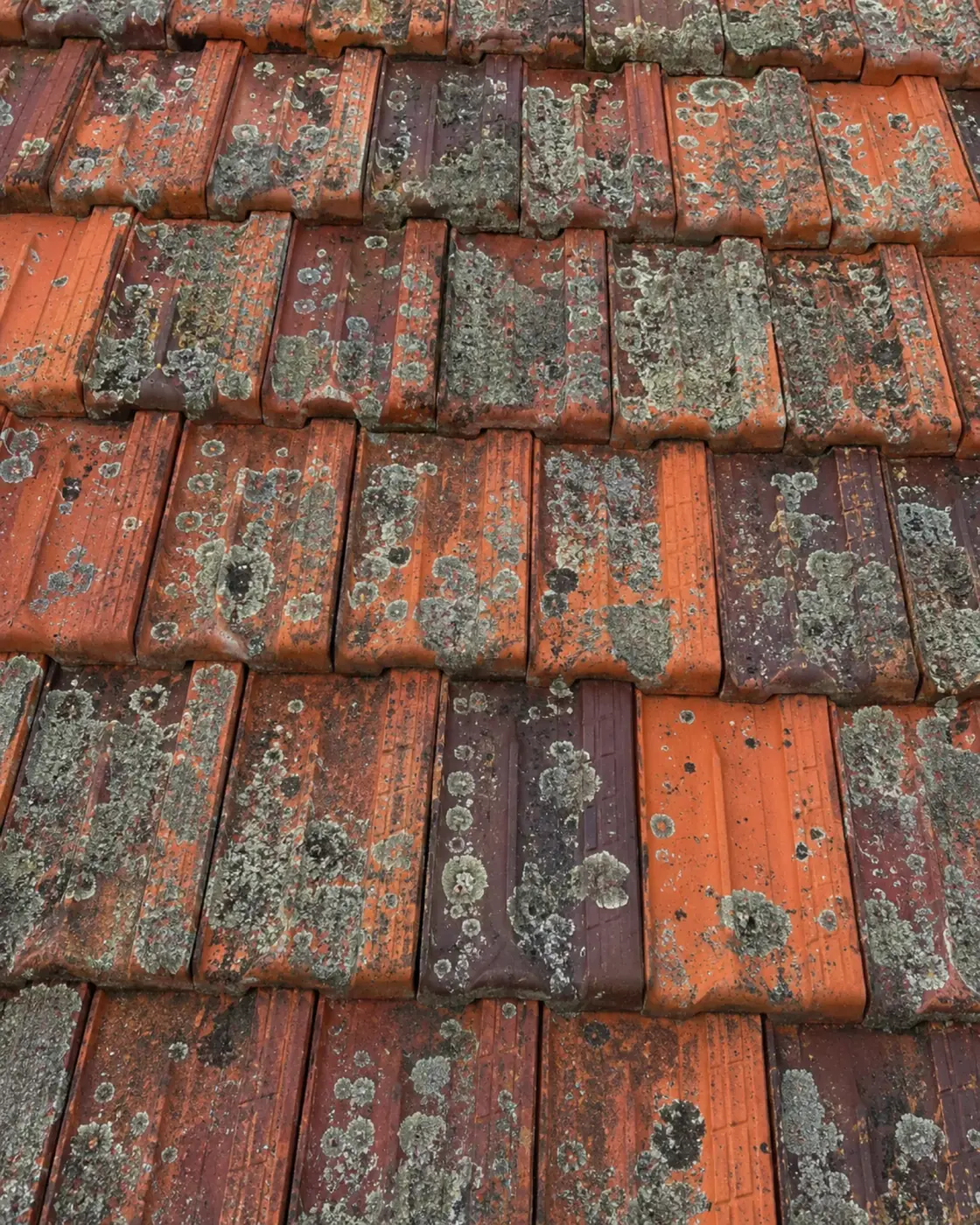
Our documented Coburg terracotta-roof job shows growth sheltered in tile joints during a second check after washing. The job account explains the extra check and how treatment can form part of the assessed cleaning approach. It is an example of a particular roof, not a recommendation to pressure wash every tiled roof.
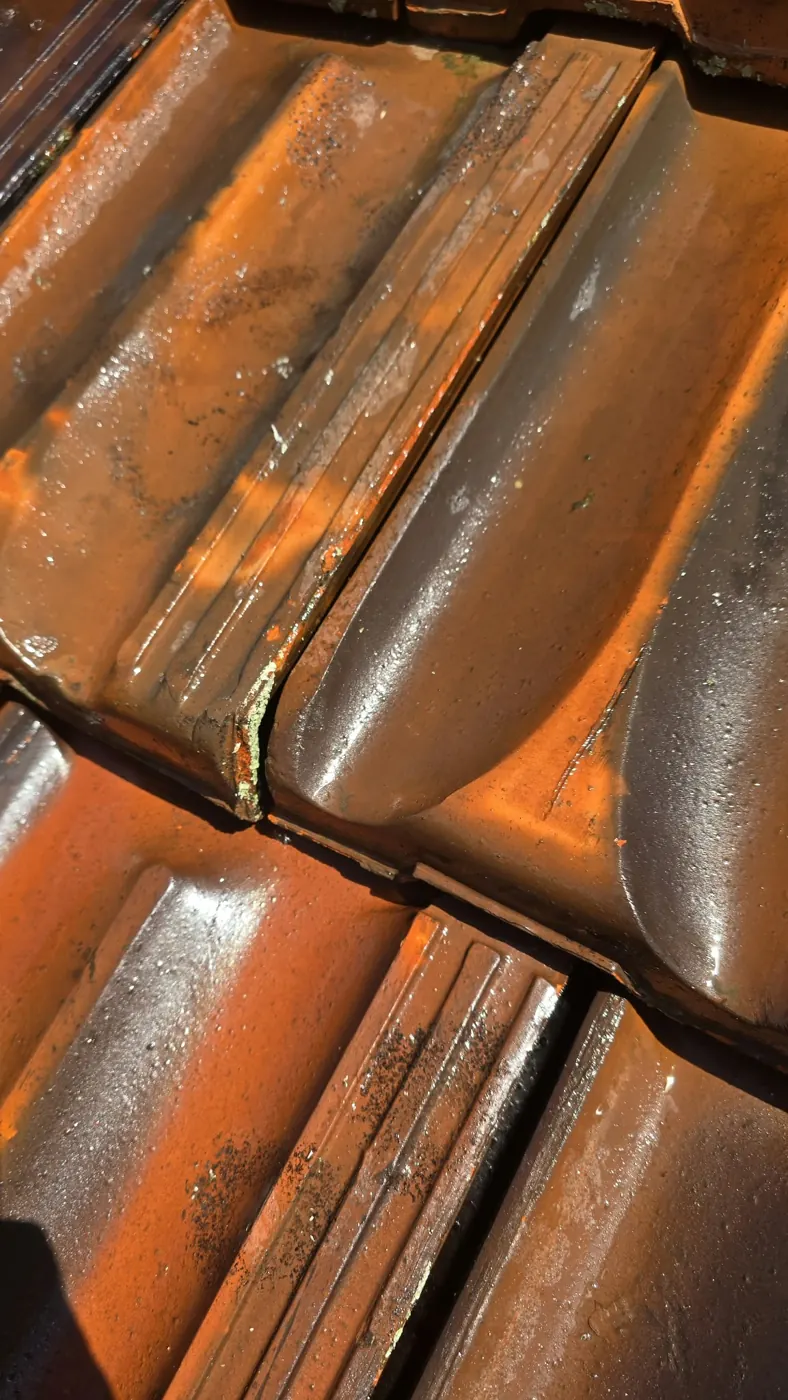
See the Coburg job photos and joint-cleaning account. For the service and quote process, see roof cleaning in Melbourne.
Already tried removing it yourself?
If a previous scrape or pressure wash has left the roof patchy or the moss has come straight back, we can take a look and tell you honestly what it needs.
What to Expect After Treatment
The result depends on the agreed method and the roof. A scope that includes rinsing or removal may give a different finish on the day from treatment-only work, where material can remain visible while it weathers away. Ask what will be visible afterwards, how long the selected approach may take and whether any follow-up is included.
Keeping Moss From Coming Straight Back
Moss doesn't need much encouragement on a shaded, damp roof plane, but a few things genuinely slow it down:
- Trimming back overhanging branches so more of the roof gets direct sun and airflow.
- Keeping gutters clear so water isn't sitting against the roof edge longer than it needs to.
- Checking shaded valleys and ridge lines first when you're looking for early signs — that's usually where it shows up before anywhere else.
None of this makes a roof moss-proof. A well-shaded roof under established trees will still need attention more often than an exposed one, no matter how well it's maintained in between.
What Does Roof Moss Removal Cost in Melbourne?
Moss removal isn't priced as a separate line item — it's part of a standard roof clean, and the treatment is matched to how much growth is actually there. For most homes, that falls within our typical roof cleaning range of $800–$1,600, with heavier or more established moss sitting toward the top of that range. For the full breakdown of what drives the price up or down, see our roof cleaning cost guide.
Frequently Asked Questions
Get a Roof Moss Assessment
Tell us what the roof looks like and we'll come back with a clear, no-obligation quote — we'll always tell you honestly if a clean is all it needs, or if there's more going on.