Soft Wash Roof Cleaning Melbourne: How It Works
If you've been researching roof cleaning in Melbourne, you've probably come across the term "soft washing." It's one of the common approaches used to clean roofs, alongside pressure washing, and homeowners often want to know what actually separates the two before they book a job. This article explains what soft wash roof cleaning is, how it works, what it can and can't do, and the situations where it's an appropriate choice and where it isn't.
For pricing, see our roof cleaning cost guide. For our full service, see roof cleaning Melbourne.
What Is Soft Wash Roof Cleaning?
Soft wash roof cleaning is a method that uses a cleaning solution applied at low pressure to treat moss, lichen, algae and organic staining on a roof surface. Rather than relying on mechanical force to strip growth off the roof, it works by treating the biological growth itself, so it lifts away with far less physical impact on the roof material underneath.
The word "soft" refers to the water pressure used, not the strength of the treatment — a soft wash system typically operates at much lower pressure than conventional pressure washing, with the cleaning solution doing the actual work.
How Does Soft Washing Work?
The general process involves assessing the roof, protecting surrounding plants, garden beds and surfaces, then applying a cleaning solution formulated for exterior roof use across the affected areas. The solution is left to dwell for a period so it can work into the moss, lichen or algae, before the roof is rinsed down at low pressure.
The exact product and dwell time varies depending on the roof material, the type and extent of growth, and weather conditions on the day — which is one of the reasons a proper assessment matters more than a generic quote. We don't publish exact product concentrations or mixing instructions, both because they vary job to job and because they're applied by trained operators rather than intended for DIY use.
Soft Washing vs Simply Blasting a Roof With High Pressure
The core difference between the two methods is mechanical force versus chemical treatment. Pressure washing physically dislodges material from the roof surface using water pressure alone, which can give a fast visual result. Soft washing instead treats the organic growth at the surface so it releases with minimal force.
Neither approach is universally better — they suit different situations. A heavily soiled hard surface like a driveway is generally well suited to pressure. A roof with established biological growth or ageing, more delicate tiles may be better suited to a treatment-based approach. Roof-tile manufacturers also emphasise that cleaning method matters — Monier recommends professional roof cleaning and cautions that inappropriate use of high-pressure equipment can damage tiles. The right call depends on the roof in front of you, which is why we assess each property rather than defaulting to one method for every job. For a fuller comparison, see soft washing vs pressure washing a roof.
What Does Soft Washing Remove?
Soft washing is generally used to treat:
- Moss — visible cushion-like growth that tends to sit in ridge lines, valleys and shaded areas.
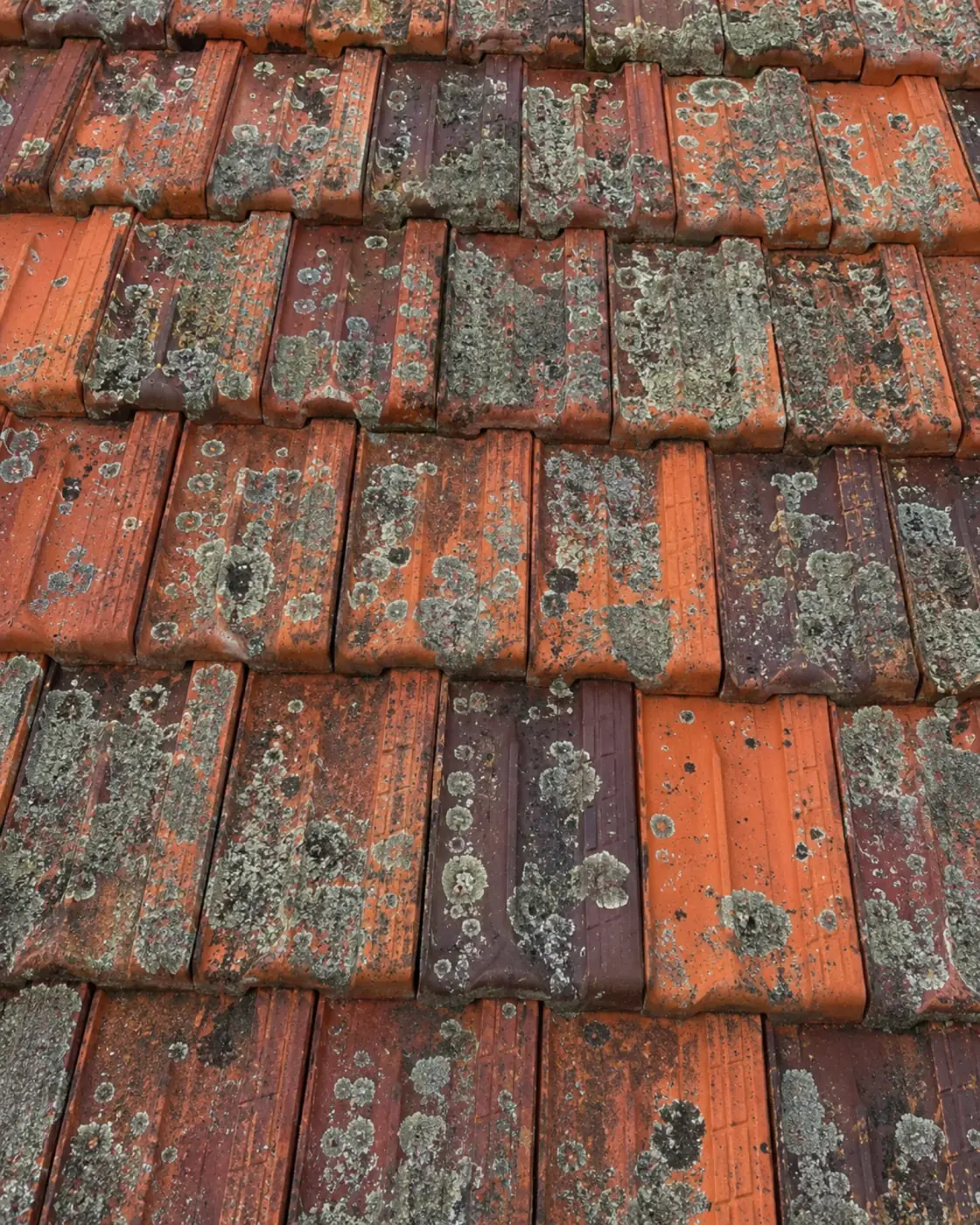
- Lichen — the flatter, often grey-green or orange growth that bonds tightly to tile and can be harder to remove than moss.
- Algae — the fine black or green staining often seen as streaking, particularly on shaded roof planes.
- Organic staining — general discolouration caused by long-term biological build-up rather than dirt alone.
Is Soft Washing Safe for Roof Tiles?
Soft washing is a widely used method for tile roofs, but "safe" isn't a blanket yes for every roof — it depends on the tile type, its age, its condition and any coatings or glazing present. A roof in reasonable structural condition generally responds well to a correctly selected and applied soft wash treatment. A roof with existing cracking, deterioration or a failing surface coating needs to be assessed on its own merits before any cleaning method is chosen.
Soft Washing Terracotta Roofs
Standard terracotta tile is a common roof material across older Melbourne homes. Soft washing can be an option for terracotta roofs, depending on the tile finish, age, condition and the type of biological growth present. As with any material, we assess the tile before recommending a method — older or more worn terracotta may need a gentler approach or more time.
Soft Washing Glazed Terracotta Tiles
Glazed terracotta has a smoother, coated surface rather than the raw fired-clay finish of standard terracotta, and it needs a more careful approach. The glazing is part of what protects the tile, so the cleaning treatment needs to be appropriately selected and correctly applied to work with that surface rather than against it. We don't make absolute claims about outcomes on glazed tile without seeing the roof — this is a case where an in-person assessment matters more than it does for more forgiving materials.
Soft Washing Concrete Roof Tiles
Concrete roof tiles can develop moss, lichen and other surface growth, particularly where moisture, shade and debris create favourable conditions. The appropriate cleaning method depends on the condition and surface finish of the tiles — concrete tile finishes can vary with age, so we assess the roof first rather than assuming every concrete-tile roof should receive the same treatment.
Can Colorbond Roofs Be Soft Washed?
Coated metal roofs such as Colorbond require a cleaning method that is compatible with the existing finish. The appropriate approach depends on the type of contamination, the condition of the coating, and manufacturer guidance. For general maintenance, BlueScope recommends fresh water and, where necessary, mild non-abrasive cleaning products. Where mould, lichen or other biological growth is present, the product and method should be selected specifically for the surface rather than treating Colorbond the same way as a tiled roof.
When Would We NOT Recommend Soft Washing?
Soft washing isn't the right fit for every situation. It may not be appropriate where:
- Tiles are already cracked, deteriorating or structurally compromised, and cleaning of any kind should wait until repairs are assessed.
- A roof has heavy physical debris (branches, large build-up) that needs removing before any treatment is worthwhile.
- Access or safety constraints mean the dwell time a treatment needs isn't practical on the day.
- A combination approach — some physical removal alongside treatment — is a better fit for the specific contamination level.
This is part of why we look at the roof before recommending a method rather than quoting blind.
Not sure which method your roof needs?
The right approach depends on your roof's material, age and condition. A quick assessment is the most reliable way to find out.
What Happens to Moss and Lichen After Treatment?
Depending on the treatment used, some biological growth may not disappear immediately. In some cases the treatment continues acting after application and remaining dead material gradually weathers away; in others, rinsing or additional physical removal forms part of the cleaning process. We explain what to expect before starting the job.
Does Soft Washing Cause Corrosion or Damage?
When the product and method are appropriate for the roof material and are applied correctly, soft washing is intended to clean the surface without relying on aggressive mechanical force. However, no cleaning method is appropriate for every roof — incorrect product choice or application on the wrong surface is where problems can occur, which is exactly why product and method selection is matched to the roof rather than applied as a one-size-fits-all approach.
How Long Does a Soft Wash Treatment Last?
There is no fixed lifespan for a roof treatment. Regrowth depends heavily on shade, moisture, surrounding trees, roof orientation and local conditions. A roof that stays damp and shaded will usually develop biological growth sooner than a well-exposed roof with little tree cover.
How Often Does a Roof Need Treatment?
There is no universal cleaning interval. We generally recommend monitoring the roof rather than cleaning according to a fixed calendar. Homes with heavy tree cover, persistent shade or recurring moss and lichen may require attention more frequently.
What Does Soft Wash Roof Cleaning Cost?
Soft wash roof cleaning in Melbourne is generally quoted as part of an overall roof cleaning price. At Roof Solutions Melbourne, many of the residential roofs we quote — for a standard house up to around 250m² — fall between $500 and $1,400, depending on roof size, pitch, material, access and the extent of moss or lichen present. For a full breakdown of what drives that range, see our roof cleaning cost guide.
Frequently Asked Questions
Request a Roof Inspection or Quote
Because the appropriate cleaning method genuinely depends on your roof's material, age and condition, the most useful next step is an assessment rather than a generic quote. We'll take a look at your roof before recommending a method.